Several days ago, I was on the phone with two of my daughters. It was the older one’s birthday, and she was blessing her younger sister. I interrupted her and suggested that she bless her sister with the best big sister possible. She laughed and said, “Tatty, that is my job, not a blessing.”
Wow, I was blown away. She is absolutely right. There are some things we can control and some that we can’t. We take responsibility for what we can and pray to G-d for the rest. We can’t ask G-d to give our children good parents; we need to be those good parents. We can pray that our parenting efforts be successful, but we can’t ask G-d to turn us into good parents by miracle. It is our job, as my daughter said, to become it.
Joseph and Benjamin
This reminds me of an episode in the Torah portion that we read this week. When Joseph and Benjamin met formally after Joseph revealed his identity, they both cried on each other’s shoulders (Genesis 45:14). Our sages taught that each cried for the tragedy that would befall the other’s children. (Rashi ad loc.)
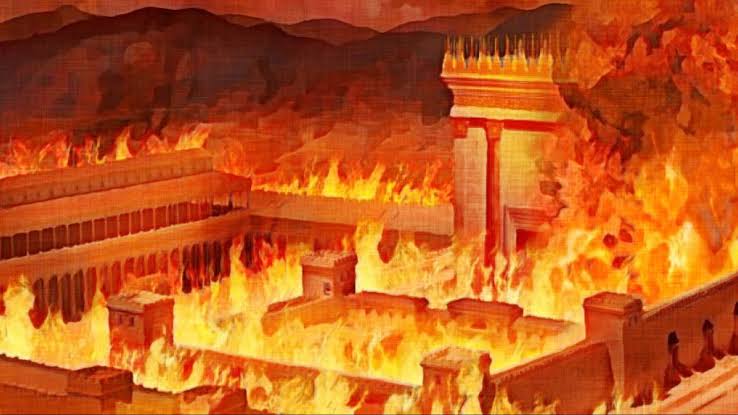
The tabernacle that was built in Shiloh, a section of Israel assigned to Joseph’s descendants, would be destroyed in battle. Similarly, the Temple that sat in the portion allocated to Benjamin’s descendants would be destroyed. Joseph cried over the loss of the Temple in Benjamin’s section, and Benjamin wept over the loss of the tabernacle in Benjamin’s section.
My dear mentor, the Lubavitcher Rebbe, once asked why each lamented and cried over the other’s tragedy rather than their own. Were they so cold-hearted as not to be moved by their own tragedy, but somehow passionate enough to feel the other’s pain?
The answer is that we cry to avert the pain of something we can’t prevent. If we can prevent it, we don’t cry. We do what we can to prevent it. This helps us understand why each prayed for the other.
The Torah tells us precisely what we must do to avert a tragedy. It is reflected in the hundreds of prophecies that G-d relayed to the Jewish people in advance of these tragedies. The way to ensure G-d’s protection is to repent from our sins and live according to G-d’s directions. Neither Joseph nor Benjamin prayed to G-d to avert the tragedy in their portion of Israel. Both knew precisely what was demanded of them to prevent those tragedies. They would need to model good behavior for their children and teach them to walk in G-d’s ways.
However, neither could do anything to avert the other’s tragedy. For this, all they could do was cry to east their pain. Therefore, Joseph cried over Benjamin’s loss while Benjamin cried over Joseph’s loss. For their own tragedy, they didn’t pray. To that end, they developed a plan of action. As my daughter said, this was not a cause for prayer. It was their responsibility. (Likutei Sichos 10, p. 149.)
The Tragedy in Bondi
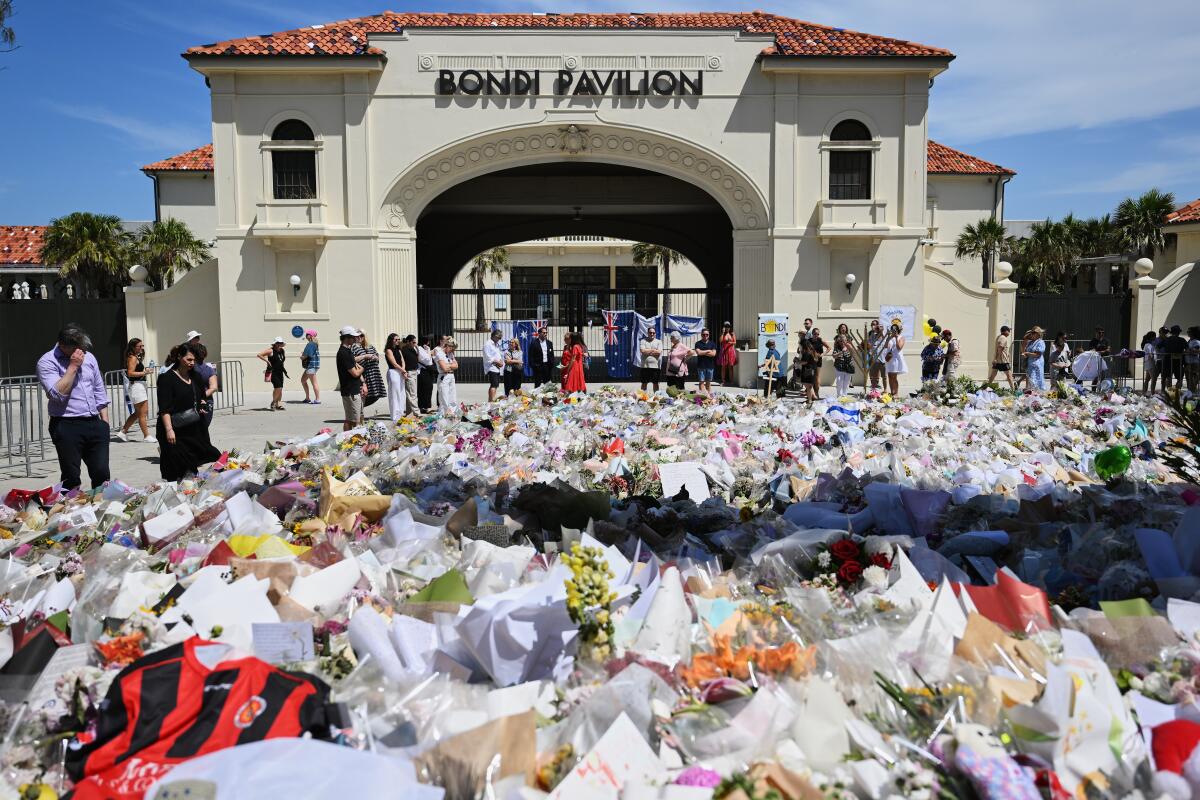
On the first night of Chanukah, as the festival of lights was ushered in to Sydney, Australia and the world, two heinous, murderous terrorists opened fire on a crowd of Jews who gathered for a public Menorah lighting on Bondi Beach. They murdered fifteen Jews while injuring countless others. The hundreds in attendance will be psychologically impacted for a lifetime. These Jews are sacred holy people who gave or risked their lives in sanctification of G-d’s name. They were attacked purely for their Jewishness.
One of the first to die in sanctification of G-d’s name was Rabbi Eli Schlanger, the organizer of the event. At his funeral, my dear friend, Rabbi Yehoram Ulman, chief rabbi of the Sydney Beth Din, and of Chabad of Bondi, and father-in-law of Rabbi Schlanger, offered a tearful, heartrending eulogy.
In his opening remarks, Rabbi Ulman quoted a Jewish law that states that a body may not be brought into a synagogue’s sanctuary for a funeral. But there are two exceptions: A holy, pious, and sagacious Jew, and a Jew who dies in sanctification of G-d’s name. Standing at his son-in-law’s coffin in the synagogue, Rabbi Ulman dramatically declared that his son-in-law was both.
The Dignity of Choice
This got me thinking. There are two ways to sanctify G-d’s name. To die for G-d and to live for G-d. Both are admitted into the synagogue after their passing. A righteous and pious person who lives for G-d, and the person slain simply for being a Jew. (Shulchan Aruch, Yoreh De’ah 344:20.)
The difference is that those who died for G-d in Bondi were not presented with a choice. All I can do is pray that if I am ever tested, I will give my life with joy. That I would rise to the occasion and rejoice over the distinct privilege and opportunity to make the holiest ultimate sacrifice for the loftiest ultimate cause.
However, living for G-d is a daily choice. That is not something I need to pray for. That is something I need to choose. Every day, as I wake up, I decide whether to snooze for 10 more minutes or wake up early and study some Torah before praying. Every day, as I sit down to lunch, I choose whether to buy lunch only for myself or to find someone hungry and buy them lunch too. If no one is available, I can decide to drop some money into the Tzedakah box for use at a later date.
There is nothing holier than giving our lives for G-d without being asked. But there is something profound about choosing to set aside portions of our day for G-d. Saying to G-d, listen here, I know that one day you will take back my soul. If you will take it completely one day, then take it now in part. I want to give you the next 10 or 30 minutes of my life. It is yours. I want you to have it. (Likutei Amarim 41.)
When a temptation arises to do so something G-d would frown upon, I am presented with the same choice. I can succumb to the temptation, or say to myself, If I were in Bondi that night, I would have given my life to G-d willingly and with joy. If I would sacrifice my life for G-d, I am surely willing to sacrifice my temptation for G-d. It is a no-brainer. (Likutei Amarim Chapter 25.)
I can’t choose to die for G-d. That is a privilege that G-d reserves only for the best and greatest among us. But I can choose to live for G-d. I can’t choose to give my life to G-d, but I can choose to give ten minutes of my life to G-d. In my daughter’s words, that is not a prayer; that is my job. That is something I can do. And by G-d, that is something we all should do. What better way is there to commemorate the holiest among us who gave their lives to sanctify G-d’s name this Chanukah?
Just Show Up
The truth is that we all made profound choices this Chanukah, choices that risked our lives for Judaism. The hundreds and thousands among us who showed up to Chanukah events all around the world knew we had a target on our backs. Nevertheless, we didn’t bend, and we didn’t stop. We went to our Chanukah events. We showed up. We celebrated. We rejoiced. We were there with our brethren to show that nothing can stand between G-d and us.
In our own little way, we risked our lives for G-d. We lived a moment of holiness and righteousness. We didn’t suffice with a prayer. We went out and did our job.
That was a tremendous beginning. In the memory of all those who were heinously murdered this Chanukah, let’s keep it up. Let’s keep giving our lives to G-d, one minute at a time.