Passover is behind us. The question is: what lies ahead?
Yes, summer stretches out before us in all its glory (at least in this hemisphere). Plans must be made, pools opened, and the baseball season has returned. But none of that is really about Passover.
So what is?
What does Passover—now behind us—ask of us today? Of course, there are practical matters: paying the holiday bills, cleaning away the last matzah crumbs, restoring the kitchen, and figuring out what to do with the leftovers.
But those are the externals. The deeper question is: how does Passover shape our spiritual lives going forward? What imprint has the Seder left on us? What endures after the holiday fades?
The Future
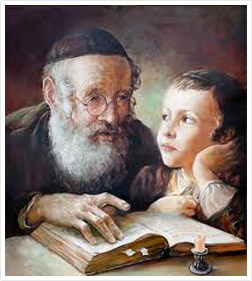
The answer can be found in the Torah. Immediately after describing the exodus from Egypt, the Torah turns its attention to the future. “And it will be tomorrow, when your son asks you, ‘What is this?’ Tell him that G-d brought us out of Egypt—a house of bondage—with a mighty hand.” (Exodus 13:14). The focus shifts from those who left Egypt to those who will one day ask about it. This shift offers a powerful clue. Our first post-Passover responsibility is Education. The next generation.
Now is the time to turn from those who know the story to those who don’t. To stop reliving yesterday and start nurturing tomorrow. To move beyond discussing how well our Seders went and start ensuring that future Seders will be celebrated.
During the Holocaust, Rabbi Yisroel Spiro, the Bluzhever Rebbe, who survived the Holocaust, organized a Matzah bakery in the Ghetto. The Nazis permitted it but wanted a detailed list of all volunteers. Few Jews were willing to risk their lives by placing their names on a list. Thus, there were few volunteers at the bakery, and only a few precious Matzahs were baked.
Jews vied for a chance to have even a small piece of matzah for their Seder. The Rebbe, however, insisted that all the matzahs be distributed to the children. The adults objected; children are not obligated to eat matzah. The Rebbe explained that he was not concerned about the present. His focus was on the future. What will happen after the war? Who would pick up the pieces and rebuild the Jewish people if not the children? It is critical that they know what matzah is.
Two Types of Tomorrow
In his commentary on this passage, Rashi teaches us that there are two types of tomorrow. The next day and the distant future. It is not enough that we set up the next generation; our eyes must be on the generations yet unborn.
An eternal nation thinks in terms of eternity. It is critical that we teach our children how to teach their children. Judaism has survived for thousands of years as a nation in exile only because parents taught their children how and why to teach their children. (See www.chabad.org/3170867 for a fascinating story in this regard.)
Jeremy Hansen is a Canadian astronaut from London, Ontario, on the Artemis II Space Mission that circled the moon. He was interviewed several months ago on a local radio station and was asked what made this mission unique. He offered several pointers, but then said something that blew my mind.
It turns out that all the scientists and engineers who organized previous missions to the moon are by now retired or deceased. Since this is the first mission to the moon in forty years, NASA had to reconstruct the entire process from scratch. The interviewer asked whether the previous scientists left notes and records. Hansen replied that they did, but that you can’t construct a space mission from notes. You need someone with experience to show you how to do it.
That is Jewish education in a nutshell. The Talmud tells us that Yanai, or Jason, a Sadducean king in Israel, murdered nearly all the Torah sages of his day. When he asked what would become of Judaism, his advisor replied that the Torah still exists and anyone can read it. This was a terrible mistake because if no one is reading it today, no one will read it tomorrow. And once a generation is skipped, a following generation might “discover” the Torah, but will be unable to reconstruct it from notes.
This is why it is not enough to ensure that we are reading the Torah today, or even that our children are reading the Torah the day after. We must ensure that our children’s children will read it in the distant tomorrow, the distant future. And to do that, we must teach our children in a way that inspires them to learn and to pay it forward by inspiring their children. How is that done?
Relate to their Struggles
The Torah itself offers guidance. We tell our children that G-d took us out of Egypt “with a mighty hand.” Two questions come to mind. (A) Why a mighty hand? Once the Egyptians relented, we left willingly—did we not? (B) Why do we say “He took us out” to children who were never there?
Because the Torah is teaching us something profound: while we wanted to leave Egypt, we were not entirely eager about where we were going. Sinai meant obligation, transformation, and a new way of life. We accepted it, in part, because we had no choice. G-d took us out to Sinai with a mighty hand.
And yet, once we tasted Judaism’s splendor, warmth, spiritual enlightenment, and vitality, it became our passion.
Our children face a similar struggle. They might veer from Judaism and abandon the Torah, but their resistance is not merely ignorance—it is often reluctance. A hesitation to be bound by tradition.
We must show them that we understand. That we, too, grappled. But what began as an obligation for us gradually turned into love. We came out of our Egypt and found the light. If we did it, they could too.
More than anything, our children must see our passion. If we practice our traditions mechanically and they feel like a burden, our children will disengage. But if they see that Judaism is our light, our fire, and our joy—they will be drawn to it. If we turn “rituals” into “spirituals”, our children will want in.
Also, we must show our children not only our commitment to Judaism, but also our enthusiasm for the One who gave it. Not only our devotion to Torah, but also our deep, passionate love for G-d. If that relationship is alive within us, it will resonate within them.
Even if they drift far and become unrecognizable as our children, their tomorrow is cut off from our today; they will nevertheless return if we plant seeds of love for G-d in our hearts. Because what we plant in our hearts, we plant in the hearts of our children. And in the generations yet to come. A child may step away, but a soul does not forget.
We can’t give up on our children, no matter how sharply they differ from us. Even if they mock our values and vow to never return, we can’t walk away from them. They are our children, G-d entrusted us with paving the way for their future. With abiding love, gentle acceptance, and a keen appreciation for the gift of our children, we will succeed in our sacred task. [1]
[1] This essay is based on Likutei Sichos 6, pp. 268–270.