The Torah portion we read this week is not easy to absorb. It is one of two places in the Torah where G-d describes the severe consequences of sin. The imagery is so stark that it can leave one shaken. In Chabad tradition, it is said that Rabbi Dovber, the second Rebbe, fainted as a child upon hearing the rebuke read aloud. Though that story refers to the other rebuke I mentioned earlier, the emotional truth is the same.
The Love Within Punishment
Chassidic masters teach that even these harsh passages are expressions of G-d’s love. One way to understand this is simple, though not easy: G-d cares enough to discipline us.
When our child and a neighbor’s child misbehave, we discipline our own child, not the neighbor’s. Not merely because it isn’t our place, but because we do not love the neighbor’s child enough to cause them pain. Discipline is costly. It hurts the one who gives it more than the one who receives it.
Children are naturally exuberant. They run, they play, and sometimes they break things. It feels harsh to punish them for acting their age. But a parent looks beyond the present moment to the child’s future. What is cute at five will not be charming at fifteen. We teach difficult lessons now so they can grow into responsible adults later.
And so we do something deeply uncomfortable: we discipline our children, even when it pains us. We accept that pain because we love them. With someone else’s child, we step back—we do not love them enough to bear that burden.
I once walked into a casino out of curiosity, not to gamble. I was curious and young, a potent combination. I was with someone I barely knew, unaware that he struggled with gambling addiction. He handed me the cash in his wallet and asked me not to return it, no matter what he said later. I agreed.
Soon enough, he demanded his money back. I refused—until he threatened me. He was bigger and stronger, and I relented. He lost the money within minutes. On the way out, he demanded, “Why did you give it back?” I answered honestly: “Because I don’t love you enough to take a punch for you.”
When G-d disciplines us, the pain is real—but it is born of love. When He gives freely, we feel His kindness. When He withholds or corrects, His love is less visible—but in truth, it runs even deeper.
The Love of Our Survival
There is, however, a deeper expression of Divine love.
Each of us carries a lifetime of failings. If the terms of the rebuke—our contract with G-d—were strictly applied, little would remain of us. Yet we are still here.
Our survival is not only miraculous because of how many powerful enemies sought to destroy us, but also in light of how often we have behaved in ways that warrant G-d’s punishment. Time and again, G-d chooses mercy over strict justice. He overlooks, forgives, and sustains.
As the Torah concludes the rebuke: “Despite all I do to them while they are in the land of their enemies, I will neither despise nor reject them, I will never break My covenant with them, for I am G-d, their G-d” (Deuteronomy 26:44).
The last two words say everything. G-d has chosen to be our G-d—our Father. He does not need us; He existed long before us. Yet once He created us, He bound Himself to us and loves us. To destroy us would undo that bond and His love. His relationship with us matters more to Him, as it were, than strict justice.
He forgives. He preserves. He ensures our survival, overruling His own contract. As Golda once put it: “If that’s not love, what is?”
“I Have Washed My Feet”
King Solomon paints a powerful image in the Song of Songs: a beloved knocks at the door, but the maiden hesitates. “I have removed my garment—how can I put it back on? I have washed my feet—how can I soil them” (Song of Songs 5:6)?
This is the story of our relationship with G-d. We grow distant. We become absorbed in ourselves, our comforts, our routines. G-d “knocks,” sending reminders—but we resist. We claim we’ve moved on. We have long removed the garments—the lifestyle—of Mitzvot. Our parents didn’t raise us that way. It feels unfamiliar and burdensome. The way of life G-d prescribed for us three thousand years ago feels foreign now. “We have removed our garments. How can we put them back on?”
The Lubavitcher Rebbe once offered a piercing interpretation. In a tear-choked voice, he explained that the next phrase—“I have washed my feet; how can I soil them?”—captures G-d’s reply.
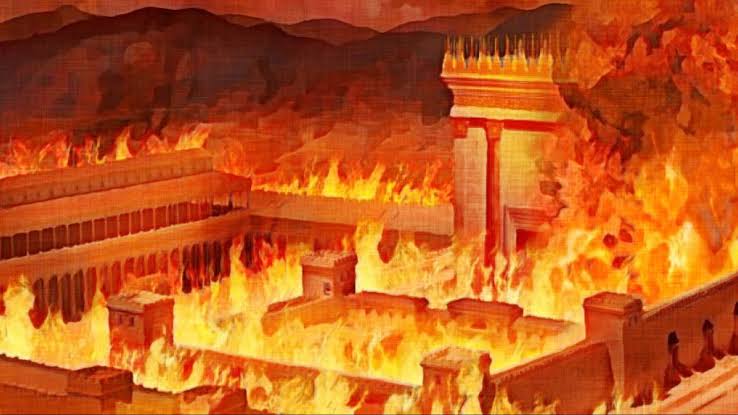
The Prophet Isaiah (66:1) tells us, “So says G-d, the Heavens are my throne, and the Earth is my footstool.” When the Temple was destroyed, G-d, as it were, withdrew His “feet” from the earth. He longs to return—to rest His presence here again—but the terms of the covenant stand. If we do not “put on our garments,” He may not “soil His feet.”
Yet the story does not end there.
The verse continues: “My beloved thrust his hand through the opening.” Seeing this, the maiden can no longer remain still—she rises to open the door.
The Rebbe explained: even when the covenant seems to limit Him, G-d finds a way. If He cannot enter through the door, He comes through another way—He digs a tunnel from His Heavenly throne to us, bypassing the strict rules of justice to reach us where and as we are, even in the darkest places.
There are moments when G-d meets us not in grand sanctuaries, but in the hidden tunnels of life—places of confinement, fear, and uncertainty—where His presence becomes unexpectedly close and real. The hostages who spent years in the Gaza tunnels spoke of feeling G-d at their side. They felt closer to G-d in those tunnels than on the streets of Jerusalem. G-d dug a tunnel under His Heavenly throne.
He does not abandon us. He never has. If our door is closed, He finds another way in. He tunnels under the door. And when we sense Him—when we glimpse His outstretched “hand”—something deep within us stirs. The lives we built in His absence suddenly feel hollow. We rise, we return, we open the door. And then, G-d can fully return as well—His presence revealed, His “feet” once again upon the earth.
That is the promise of redemption. It is near. And it depends on us—on our willingness to respond to His persistent, unyielding love. May we awaken. May we answer. And may we merit to see that love revealed for all to behold. Amen.[1]
[1] This essay is based on Toras Menachem 5720:1, pp. 416–418.