
Your Fellow is Golden
G-d asks us to journey through life believing that our fellow is golden—to see people through their strengths rather than their faults. Sadly, we rarely rise to that ideal. More often than not, we define others by their shortcomings.
Rabbi Yaakov Lorberbaum of Lisa was a renowned scholar whose works are studied to this day. Once, a member of his congregation asked him to determine the precise moment the new moon would appear, and the new month would begin. Unable to calculate it on the spot, the man slandered him throughout the town. Ultimately, the great rabbi was dismissed over this trivial lapse.
This is what it looks like to judge a giant by a minor imperfection. And he was far from the only victim. A student of Rabbi Yehudah Tzvi Berlin once asked his venerated teacher for a blessing that his congregants would never speak ill of him. The rabbi replied, “I can grant you any blessing—but not that one.”
He explained: When Moses sent Joshua with the spies, he added a letter yud to his name, praying that he be spared from their slander against the Holy Land.[1] Yet when he later appointed him leader of the nation, Moses reverted to Joshua’s original name, without the added letter. Why? Because a prayer that people never speak ill of their leaders is, ultimately, a prayer in vain.
And yet, this is not how G-d relates to us. G-d chooses to see us through our strengths, not our failings. As the Torah says, “He does not gaze upon Jacob’s faults” (Numbers 23:21).
Rabbi Chaim of Volozhin once encountered a Midrash stating that G-d is “content with His lot.” He struggled to understand how this could apply to G-d, “Who owns the world and all that is in it” (Psalms 24:1). His teacher, Rabbi Eliyahu of Vilna, explained: “G-d’s lot is His people” (Deuteronomy 32:9). G-d is content with His nation. He overlooks their flaws and rejoices in their virtues. (See also Sfat Emet, Sukot 5646.)
The Etrog
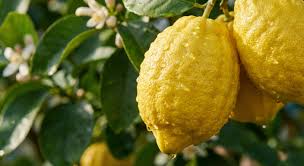
This week’s portion discusses the festivals, including Sukkot, and the mitzvah of the Four Species. Of the four, the etrog—the citron—receives the most attention. The Torah calls it a “beautiful fruit,” and Jews go to great lengths to obtain the finest one available.
Yet the word etrog is read homiletically as an acronym for al t’vieini regel ga’avah—“Let not the foot of arrogance overtake me” (Psalms 36:12). The etrog may be flawless, fragrant, flavorful, and perfectly formed, yet it does not look down upon its less beautiful counterparts.
The Talmud (Sukkah 35a) teaches that an etrog tree produces both perfect and blemished fruit. And this, in truth, is its beauty—not its symmetry or fragrance, but its willingness to share space with imperfection. It does not push lesser fruit aside. It makes room for them. That is true beauty: humility.
Rabbi Yisrael Globerman of Jerusalem embodied this idea. All year long, he would save money to purchase the most exquisite etrog available. Yet after acquiring it, he would quietly buy a simple one and bring that to the synagogue.
When asked why, he explained: “When I bring the finest etrog to the synagogue, I feel a sense of pride—yet the entire message of the etrog is humility. So, I found a solution. I wave the beautiful one at home and bring the simple one to the synagogue, where it helps me remain humble.”
G-d sees the Jewish people as the etrog sees its fellow fruit—and He asks us to do the same. He does not merely tolerate imperfection; He cherishes us despite it. Waving the etrog is not only about beautifying G-d’s Mitzvah. It is also about cultivating humility, which is the ultimate beauty of G-d’s Mitzvah.
A man once asked Rabbi Yochanan Twerski, the Tolner Rebbe of Jerusalem, for a blessing to find a beautiful etrog. The Rebbe replied: “If you fashion a beautiful etrog within your heart (Midrash Tanchuma Buber, Emor 28 teaches that the etrog is shaped like a human heart)—by loving others without haughtiness—you will find a beautiful etrog in the marketplace.” And indeed, he did.
Two Yuds
Rabbi Naftali of Ropshitz was a renowned Chassidic master. In his youth, he was taught that when two Hebrew letters yud appear together in a prayer book, they represent the Divine Name and should be read accordingly. One day, he came across a colon at the end of a sentence. To his young eyes, the two dots resembled a pair of yuds, and he read them as such.
His teacher gently corrected him with a lesson that echoes through generations: “When two Yuden (German for Jews) stand side by side, there you will find G-d. When one stands above the other, G-d is not found. On the contrary, such Yuden are the end of the line.”
G-d asks us to love one another as He loves us—to value others as He values us. This doesn’t mean He is blind to our faults. He knows them well. But He chooses not to define us by them. He is content with us.
The Unassailable Core
A Jew who had joined the Haskalah movement and abandoned observance once approached Rabbi Menachem Mendel of Lubavitch, the Tzemach Tzedek, with a question. In the Book of Esther, the word yehudim (Jews) is sometimes spelled with one yud and sometimes with two. Why the variation?
The Rebbe explained: A Jew possesses two souls—a G-dly soul and an animal soul—each with ten faculties (represented by the letter yud). When the Megillah describes the Jews at the time of their spiritual failing, yehudim appears with two yuds, reflecting the pull of both souls. When it describes their redemption, it appears with one yud, indicating that they had returned to being guided primarily by their G-dly soul.
Seeking to challenge him, the man pointed out that when the Megillah describes the salvation of the Jews of Shushan, the spelling reverts to two yuds. The Rebbe responded: The Haskalah Jews of Shushan were deeply assimilated into Persian culture. Even after repentance, their animal soul remained strong.
Yet they were still saved. Why? Because no matter how far a Jew strays, the core remains intact. Sometimes it takes a crisis to awaken our inner truth. Haman’s decree stirred even the Jews of Shushan to reconnect with their essence.
The Rebbe concluded: “The same is true of you. However distant you feel, a vibrant Jewish soul lives within you. Your soul is golden—and one day, it will emerge.”
This is how we are meant to see one another. Even when flaws are visible, we choose not to define people by them. We recognize that beneath the surface lies a holy, luminous soul. A beautiful diamond.
Rabbi Monye Moneszon, a diamond dealer, once asked the fifth Lubavitcher Rebbe why he cherishes simple Jews. The Rebbe asked him to display his best diamonds, which he did, but the Rebbe failed to see their beauty. Moneszon explained that only an expert can appreciate the value of a diamond. The Rebbe replied, “Only one who understands souls can perceive the true value of a Jew.”
[1] Slander against Israel. This is a play on words: In the Torah spies are called meraglim and gossip is called regel.