

Articles in Parsha Insights
Bereshit: Introducing Temptation

What You Don’t Know Can’t Hurt You
Have you ever known a baby to come out of the womb craving chocolate? Of course not! Parents have the same conversation every time a baby starts eating solids. “How long do you think we can keep him away from sweets?” As long as …
Noach: The Power of Repentance
A Patient G-d
Following the story line of our Parsha one discovers that G-d gave ample warning of the coming flood to the people of that generation. Noach was told to build his ark and collect his animals, for 120 years! The entire time he exhorted the people, pleaded, begged and …
Bereishit: Free Choice

Is He Really There?
“In The Beginning G-d Created The Heaven And The Earth”. These words have sparked many arguments over the years, both theological and philosophical. Monotheism versus atheism, creationism versus evolutionism, religious over secular; a potpourri of choices are laid out before you and you are free to choose.
Tweet
Bereishit: The Serpent Within

Evil Inclination
In this week’s Parsha we read of the dialogue between Eve and the serpent. Jewish sources tell us that the serpent’s spirit is the archetypal Yetzer Hara, evil inclination, that exists within every Jew. It therefore follows that an analysis of the serpent’s words will familiarize us with our …
Lech Lecha: The Essence of Judaism
Why be Jewish?
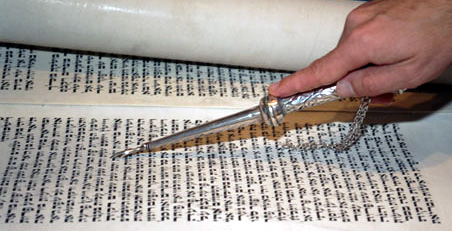
As a rabbi I am often asked why it is important to be Jewish. A plethora of answers are offered, but only one is intellectually honest. Some argue that Judaism is a religion of ethics. Others say that it encourages free thinking and open dialogue. Others invoke Judaism’s …
Chukas: Spare the Rod

The Debate
Modern society has long debated the merit of corporal punishment. Generations of children were raised with physical discipline, but current popular psychology argues against it. Today, the rod must be spared, even when children stubbornly refuse to comply, lest the children be spoiled.
Tweet
Nitzavim Vayelech: Genuine Growth

To Tell or Not To Tell
On the first day of school, hoping to impress the class with his experience, my brother’s teacher listed the many schools where he had taught over the previous decade. One boy , dully impressed, but not quite in the way the teacher had hoped, wondered, …
Ki Tavo: Serving in A Selfish World
Father and Son
After a long and agonizing separation, Jacob and Joseph were finally reunited at the ancient gates of Egypt. What did the loving father do at that moment? Did he embrace his son and release his pent-up tears? No, he recited the Shema, proclaiming his faith in G-d.
Tweet