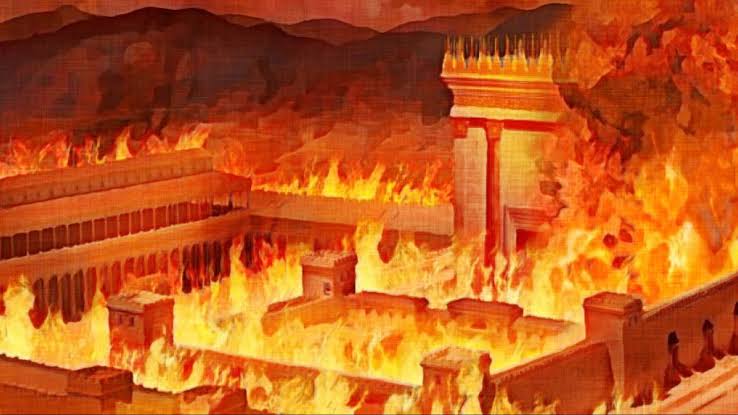

When G-d disciplines us, the pain is real—but it is born of love. When He gives freely, we feel His kindness. When He withholds or corrects, His love is less visible—but in truth, it runs even deeper.
Read the full story »
The Jews
Today we are known as Jews, but in the Torah we were known as Hebrews and Israelites. Who are we really, Hebrews, Israelites or Jews? The more I think about it, the more I feel an identity crisis coming on.
Tweet
The Humble Moses
The book of Leviticus begins with the sweeping majesty of Moses’ first entry into the tabernacle. “Vayikra,” G-d called unto Moses and invited him to the Tent of Meeting. Uplifting and inspiring as the moment was, Moses, understood that small is great, received his honor in abject humility. In …
The Generous Economizer
When you see a miser spending money in generous amounts you can assume that something out of the ordinary is afoot. It might be a simcha, such as an upcoming wedding, perhaps a tragedy or an illness. Whatever it is, you would certainly assume an exception before assuming …
The Jewish Woman
Did you know that women were the first to contribute to the building of the tabernacle? Did you know that not a single woman worshiped the golden calf? Did you know that Jewish women did not believe the negative report, brought by the spies, about the land of …
Petty Grudges
Are you the forgiving type? I don’t mean the type that forgives after making another grovel for it. I mean the type that forgives without even being asked. If you are, well if you are, I have no words to describe you. You are perhaps an angel or a …
The Nature of a Leader
Why do we gravitate to the charismatic and charming when choosing our leaders? We look for a leader that can galvanize the masses, lead the government, command the military and interact with fellow Heads of State. Former President Bill Clinton is a perfect example; he has …
Four Elements
The tabernacle Moses was commanded to erect comprised the four basic elements, inanimate, vegetative, animate and human. The floor was desert sand, representing the inanimate element. The walls were wooden, representing the vegetative element. The roof was of animal hide, representing the animate element and the people that worshiped …
One and Others
Have you ever noticed that the classic proclamation of Jewish faith, the call Hashem Echad – G-d is one, can be easily mispronounced as hashem Acher – another G-d? Rather than proclaiming our faith in a single – one and only – G-d we can inadvertently slide into …