When we raise the matzah at the Seder table, we are tuning into two contradictory experiences.
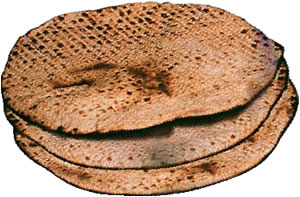
First, we encounter the matzah as the “bread of affliction,” as we attest at the opening of the Haggadah. This is the meager ration of bondage—the cracker-like bread the Egyptians forced upon our ancestors because they wouldn’t provide the time or means for a real meal. Yet, by the end of the Haggadah, the narrative shifts: matzah becomes the “bread of freedom.”[1] It reminds us of the haste with which we left Egypt—a dough so hurried it had no time to rise.
At the start of the Seder, we simply discuss these two elements. We chant the words, unpack the history, and delve into the symbolism until the concepts are clear in our minds. But intellectual clarity isn’t the goal. In discussion, we are still talking about the past; a bondage of ancestors long gone, the Exodus of an ancient era.
The true objective of the Seder night is to experience redemption for ourselves. We declare this early on: if not for G-d liberating our ancestors, we and our descendants would still be enslaved. By the end of the night, we pronounce that every person must see themselves as if they, personally, had just walked out of Egypt.
But how? How do we enter that mindset when we are 3,338 years removed from the event? This is why we follow the readings with the act of eating. The culinary experience bypasses the brain and stirs the kishkes in a visceral way. As we crunch the matzah, the flavor and texture bridge the centuries. As our ancestors chewed, so do we. As they crunched, so do we. As they swallowed, so do we. This sensory immersion ingrains the experience until the walls of time melt away, and we are inside the story.
This brings us back to the central paradox: Which experience are we meant to internalize as we eat? Are we eating the bread of the despondent slave or the bread of the liberated Jew? We feel we must choose; we cannot visualize both at once. Yet the Haggadah insists that it is both.
When Low is High
If you ask whether the matzah represents the depths of bondage or the heights of freedom, the answer is “Yes.” Both are true. The matzah pulls us into the burdens of suffering, the desperation of helplessness, and the heavy fog of futility. Simultaneously, it floods us with relief; a rush of liberty and an innate sense that anything is possible.
On any other night, these two states are contradictory. But that is what makes this night unique. Why is this night different? Because on this night, the depth of struggle is the very summit of joy. On this night, an overwhelming sense of failure is transformed into an exhilarating sense of success.
G-d is at our side every night, but usually in a hidden, spiritual sense. In our minds, we can try to perceive a negative as a positive; in our hearts, we can try to transform defeat into victory. But in the “real world,” disaster feels dark, and victory feels light. They rarely occupy the same space. Except on this night. This is the power of the Seder: darkness becomes the source of light, and the night itself shines like the day.
The Night of Despair
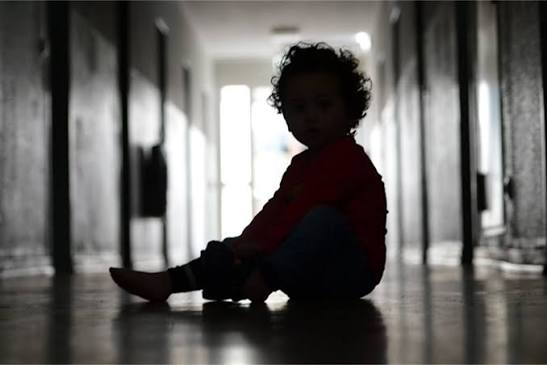
To understand this, we must look at the moments when life feels like it is falling apart. There are times when no one seems to understand us; when we feel abandoned by parents, distanced from a spouse, or rejected by our children. It is difficult to summon the “Pesach spirit” when life feels like a heavy burden. We remember the children we used to be—filled with promise—and compare them to the reality of a life that feels fractured and dissipated.
Around the Seder table, the atmosphere is giddy. Children ask questions, teenagers chatter, and adults engage in enlightened conversation. Yet, for some, the contrast only deepens the misery. Scarred by childhood traumas or the weight of past failures, we feel burrowed into a hole with no way out. We feel as though the world is a conspiracy designed to make us fail.
A night that should be joyful and uplifting can be depressing and drag us down. The contrast between us and others, what should be and what is, can make this night more wretched than any other.
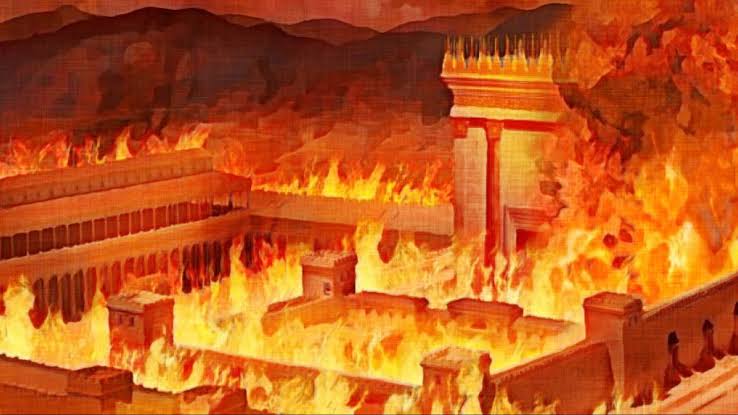
For the person in that hole, the matzah is bread of affliction. We eat it and perfectly imagine our ancestors bent over their meager rations at a miserable worksite. We feel every bit as enslaved as they were.
The Empowering Flip
Then, all at once, the scene flips. The matzah becomes the bread of liberation. As we chew, the spirit of freedom begins to course through us. What causes this transformation? A simple, revolutionary thought: I am not alone.
G-d is not watching from a distance; He is right here. If He is beside me, then He knows exactly what I am experiencing. He is inside my limitations with me. He cries as I cry. And if He hasn’t pulled me out yet, it is not because He is indifferent—it is because He knows something I have forgotten: He gave me these burdens, and the strength to overcome them. He hasn’t pulled me out because He has empowered me to pull myself out.
This realization changes everything. The ropes that tie me down are not meant to shatter me; they are meant to be shattered by me. My prison is not a cage; it is a weight to be pushed against. Resistance is what builds muscle. Like amping up the resistance on an elliptical machine, the struggle isn’t there to show me how weak I am—it is there to make me strong.
Suddenly, I realize I am not the weakest person at the table; I am the strongest. Others may have started at the finish line, but I am starting from deep in the trenches. The effort I expend just to reach “level ground” is generating so much momentum that I am about to surge past everyone else.
My challenges are not anchors to weigh me down; they are platforms on which to shine. My darkness is the source of my power. My limitations induce me to dig into an endless well of resilience that can only be tapped when one is trapped. My “trap” turns out to be my catapult.[2]
This is how the matzah “flips the script.” On ordinary nights, the bread of affliction holds us down. On this night, the bread of affliction becomes the engine of our ascent. With G-d marching beside us and dwelling within us, the struggle and the freedom are one and the same.[3]
[1] We hint at the matzah of liberation at the very beginning of the Haggadah. Right after declaring the bread of affliction, we invite all in need to dine with us. We have plenty of food for them, including roast lamb chops from the Paschal lamb. So, are we in afflicted constriction, or majestically wealthy and free with our generosity?
[2] This also explains the apparent dichotomy described in the previous footnote.
[3] This essay is based on Toras Menachem 5719:2, pp. 204–206.