

A Diaspora Blessing that Gives us Courage
What a tearful and joyful reunion it was between Jacob and his long-lost son, Joseph, when Jacob arrived in Egypt. It was a dramatic moment, twenty-two years in the making. But this was just the first in a series of deeply emotional discoveries. At least Jacob knew what to expect when he met up with Joseph. He knew who Joseph was and had heard that Joseph remained true to his Jewish faith and upbringing.
The next series of meetings was a genuine surprise for the elderly father and grandfather. Joseph introduced him to his Egyptian wife and the two sons born to him in Egypt. This was a first for Jacob. One can imagine his trepidation as he dared ask, “Who are they, Joseph?” One can only imagine his joy when he heard that Joseph had been married under Jewish law and that his sons had been raised Jewishly.
The Diaspora Blessing
Joseph had been away from home for twenty-two years, but his home, his upbringing, had never abandoned Joseph. It stood by him through thick and thin. Several years later, Jacob would coin a blessing that every Jewish parent has since used to bless their children. Jacob gathered in his two grandchildren, Joseph’s sons, Manasseh and Ephraim, and proclaimed, “May all Jews bless their children with your names, saying to them, ‘May G-d make you like Ephraim and Manasseh.’”
To Joseph, this was the ultimate stamp of approval from his father. Of all his grandchildren, Jacob chose Joseph’s children as the perfect prototype of a Jewish child.
This was wonderful for Joseph, but it is a little worrying for us. Manasseh and Ephraim were the only of Jacob’s grandchildren to be born in the diaspora, in Egypt. They were raised in a non-Jewish culture and were surrounded by non-Jewish behavior and values. Joseph and his wife created a bubble at home where the children were sheltered from Egyptian influence, but was it enough? Should Jacob not have chosen from among his many grandchildren born in the Holy Land, in the sacred bosom of his family home?
Let’s apply this question to today. Who is the prototype Jew that should be held out for approbation? Is it the Jew who manages to survive with identity intact despite living among the gentiles and surrounded by foreign value systems and faiths, or the proud Jew, born and raised in the Holy Land, who absorbed sanctity with their first breath, and who spent a lifetime saturated in Judaism and Jewish identity?
Who is the stronger Jew? One who knows only Judaism and was never exposed to heretical ideas, or one who is constantly beleaguered by antisemitism and anti-Jewish messages?
This question is especially poignant during this time of year, when a Jew can’t step out on the street in the Diaspora without seeing a million reminders of the non-Jewish celebrations and holidays. The Diaspora Jew must shield himself a million times a day from this influence and remember that he is a Jew. In contrast, the Israeli Jew might not even be aware that this is a holiday season celebrated by people around the world. Isn’t it better to be an Israeli Jew this time of year?
A Diaspora Success Symbol
Yet, Jacob chose his Diaspora grandchildren. He knew that the Jewish people would not always live in Israel. When he made his way to Egypt, he realized that the luxury of the Israeli Jew had become a thing of the past. Going forward, the Jews would live in Egypt for several hundred years and would need to survive it. After that, our history would be replete with exiles and dispersals.
Using a Jew born and bred in Israel would not provide comfort or security to the Diaspora Jew. Of course, the Jew in Israel retains his identity. He breathes Judaism every time he steps out or in. The Diaspora Jew needs to know that Judaism can flourish in Egypt, too. Not just in a Diaspora attended by the likes of Jacob, the saintly patriarch, but even a Diaspora comprising ordinary Jews with no exceptional leader.
Manasseh and Ephraim fit this bill perfectly. They were born and raised in Egypt before Jacob arrived. Before their uncles came to build a Jewish day school. They were raised in an entirely non-Jewish atmosphere, yet their Judaism and Jewish identity flourished. There was literally no difference between these two grandchildren and those who were born in Israel. In fact, Jacob chose to establish Manasseh and Ephraim as fathers of their respective tribes on par with his sons who were raised in his country, in his home, by his hand.
That is how powerful an upbringing Manasseh and Ephraim received in the Diaspora. All Diaspora Jewish parents would naturally wish that for their children. May G-d make you like Ephraim and Manasseh, may G-d give you the fortitude and inner strength to grow up as proudly and fiercely Jewish in the Diaspora as the Jew in Israel.
When Jacob passed and was transported to Israel for interment, he asked that Manasseh and Ephraim serve as pallbearers. The poignant visual message was inescapable. Jacob was leaving Egypt, leaving the Jews in the Diaspora alone. But fear not, because Jacob is being carried by two Jews who thrived in the Diaspora well before Jacob ever arrived. If they could do it before Jacob, we could do it after Jacob.
The Diaspora Message in Israel
Today, millions of Jews live in Israel, but even in Israel, parents bless their children to be like Manasseh and Ephraim. They know how hard it is to be a Jew in the Diaspora. Diaspora Jews need greater strength because forging an identity through resistance is harder than without it. The Israeli Jew might be more ensconced in Jewish identity, but the Diaspora Jew’s commitment is stronger because they work harder to forge it. They swim against the current constantly, exercising their spiritual muscles. This is why the Israeli parent also blesses his children with the strength of Manasseh and Ephraim.
The Challenges of Today
Living in Israel these last few years, in fact, life in Israel since the modern Jewish aliyah has been fraught with strife. The Israeli Jew fights war after war and battle after battle. Israeli Jewry loses son after daughter and father after mother. There is almost no home in Israel that is not gripped by grief. All this, while the Diaspora Jew sits comfortably at home in relative safety and security.
However, the Diaspora Jew has a different set of challenges. Whereas the challenge of the Israeli Jew is the physical onslaught of our enemies, the challenge of the Diaspora Jew is the social and spiritual onslaught of the enemy. Constantly mocked and beleaguered, the Diaspora Jew is under relentless psychological attack. The Israeli Jew requires mental and physical toughness to keep going. The Diaspora Jew needs emotional and spiritual toughness to keep going.
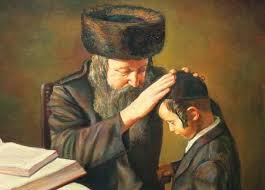
Neither is easy, but if you had to measure danger to the body versus danger to the soul, the latter is a much greater threat and requires much more strength to overcome. The Diaspora Jew always wonders how long they can hold on. Then along come their parents, placing their loving hands upon their heads and blessing them through their tears: May G-d make you like Ephraim and Manasseh.
If Manasseh and Ephraim could thrive and flourish in Egypt with only their parents for role models, we, in the Diaspora, surrounded by hundreds of role models and millions of Jews, can undoubtedly make it through. It is a blessing that gives us courage when we need it most.[1]
[1] This essay is based on Likutei Sichos 15, pp. 432–438 and Likutei Sichos 20, pp. 237–242.