
Articles in Parsha Insights
Naso: Transforming The Desert

A G-dless Environment
The Temple service, described in our Parsha, was held in an arid and barren locale, the desert. G-d charged our ancestors with a special mission: transform the desert and make it bloom, bloom with the flowering blossoms of spirituality. In our day we have a similar mission: transform …
B’midbar: Celestial Formations
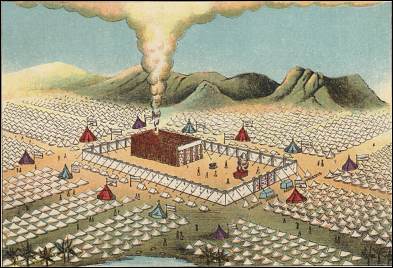
Around the Tabernacle
They traveled together, a single mass of two million people moving slowly through the sands. Each tribe precisely positioned, each group in perfect formation, their footsteps marked the desert.
Tweet
B’Midbar : The Counting Paradox

To Count or not to Count?
In this week’s Torah reading, (1), we read, in detail, about one of the several censuses taken of the Children of Israel in the years following their Exodus from Egypt.
Tweet
B’Midbar: A Question of Numbers
A Small Tribe
In this week’s Parsha we read that Moshe took a census of the nation. A quick scan of the numbers shows the tribe of Levi to be the smallest, with only twenty-two-thousand members. By way of comparison, the other tribes had anywhere from thirty to more then one …
B’Midbar Shavuot: Shavuot and the Desert
Seeking Inspiration
This weekend we will celebrate the last Shabbat before Shavuot. Since Shabbat is the source of blessing for the following week it is fitting to reflect upon the upcoming holiday during the course of this Shabbat.
Tweet
B’Midbar: Everyone Counts

The Census
During the forty years of our ancestors’ journey across the dessert their census was taken a total of four times, one of which is recorded in this week’s Parsha.
Tweet
B’har: Sabbatical – An Expression of Faith

Sabbatical
Would you enjoy taking a full sabbatical every seven years? You could relax, travel, study and spend quality time with your family.Would you enjoy it if your entire country took a sabbatical every seven years?
Tweet
Emor: Demonstrating Confidence
Fortuitous Beginnings
Our Parsha begins with the many restrictions placed upon Kohanim, the priestly class.
They are forbidden, with rare exceptions, to attend funerals lest they become ritually impure. They are restricted in whom they may marry. They are forbidden to shave or to mutilate themselves. This is because they have an …